

Introduction
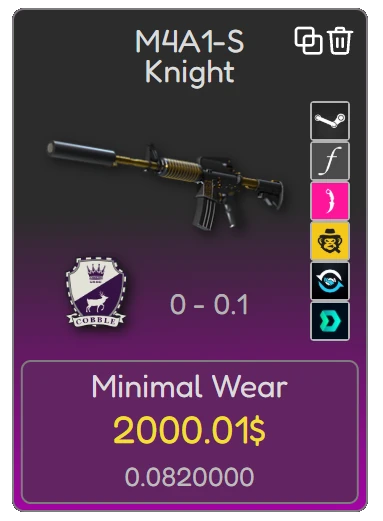
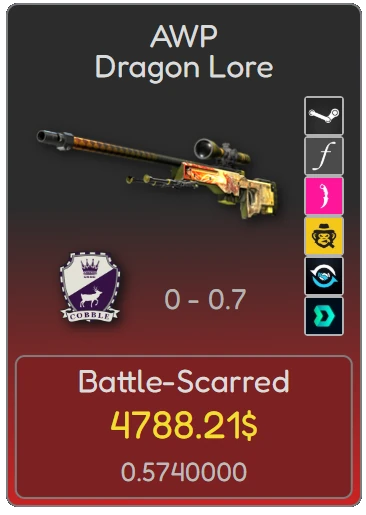
Trade-ups are an in-game CS2 mechanic that allows players to exchange multiple lower-rarity skins for a single skin of higher rarity. For most trade-ups, the exchange ratio is 10 to 1, while certain special contracts, such as those involving Covert skins, can allow players to trade 5 skins for a knife or gloves.
10x
=
In this guide, we’ll break down the mathematics behind CS2 trade-ups, explaining how the mechanics work, how to calculate the possible outcomes and their probabilities, and how factors such as skin collections and float values affect the results. Using clear explanations and practical examples, you’ll learn how to evaluate trade-ups, calculate their expected value, and identify potentially profitable opportunities for yourself.
New vs old trade-up formula
The old trade-up formula took the number of possible outcomes for each input skin into account. The more possible outcomes a skin had, the greater its influence on the trade-up results. This is why certain skins, commonly known as filler skins, became highly sought after. These skins had only one possible outcome, allowing players to use them strategically to influence the results of a trade-up.
With the introduction of the new trade-up formula, the system works differently. Each input skin now contributes equally to the outcome probabilities, meaning that every skin in a standard 10-skin trade-up accounts for 10% of the possible outcomes. This makes the number of possible outcomes associated with an individual input skin irrelevant to its influence on the final result.
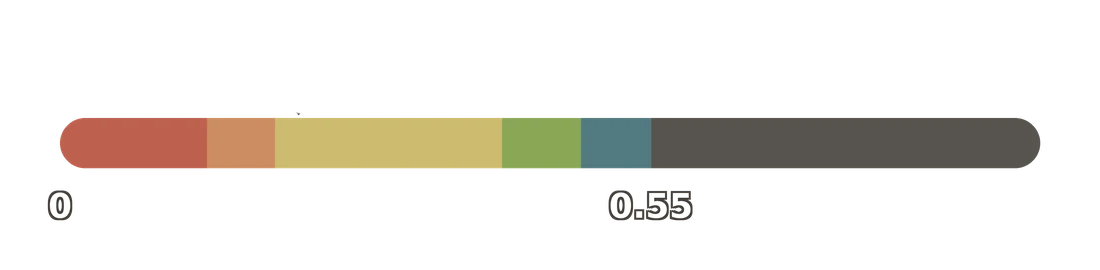
The new formula also takes float caps into account differently, which can significantly affect the float of the resulting skin. As a result, even an input skin with a relatively low float can produce an outcome with a much higher float, depending on the float ranges of the input skins.
In the following chapters, we'll break down these changes step by step, to make everything clear.
Logic behind tradeups
Let's start by explaining how float caps affect trade-ups under the new formula.
The key principle is that the average adjusted float of all input skins determines the adjusted float of every possible outcome. The adjusted float of an individual skin is calculated using the following formula:
To calculate the average adjusted float of a trade-up, we sum the adjusted floats of all input skins and divide the result by the number of skins used, \(n\):
Here, \(\sum\) represents the sum of the adjusted floats of all input skins. The minimum and maximum float values refer to the float range of each individual skin. This means that a skin with a float of 0.10 does not necessarily have a lower adjusted float than a skin with a float of 0.15, as their respective float ranges may differ.
Once we know how float calculations work, let's look at how the probabilities of different outcomes are determined.
The new trade-up formula no longer gives skins different weights based on the number of possible outcomes in their collections. Instead, each input skin contributes equally to the overall probability distribution.
Let's say we use 10 skins in a trade-up. Each skin represents 10% of the total input.
Imagine that one of these skins belongs to a collection with three possible outcomes of the next rarity. Since this input skin represents 10% of the trade-up, its contribution is distributed equally among those three outcomes. As a result, each outcome receives a 3.33% chance from that input skin.
Now, imagine that another input skin belongs to a collection with only one possible outcome of the next rarity. In this case, the entire 10% contribution goes to that single outcome, giving it a 10% chance from that input skin.
If multiple input skins belong to the same collection, their contributions are added together. This increases the probability of receiving outcomes from that collection.
Egzample
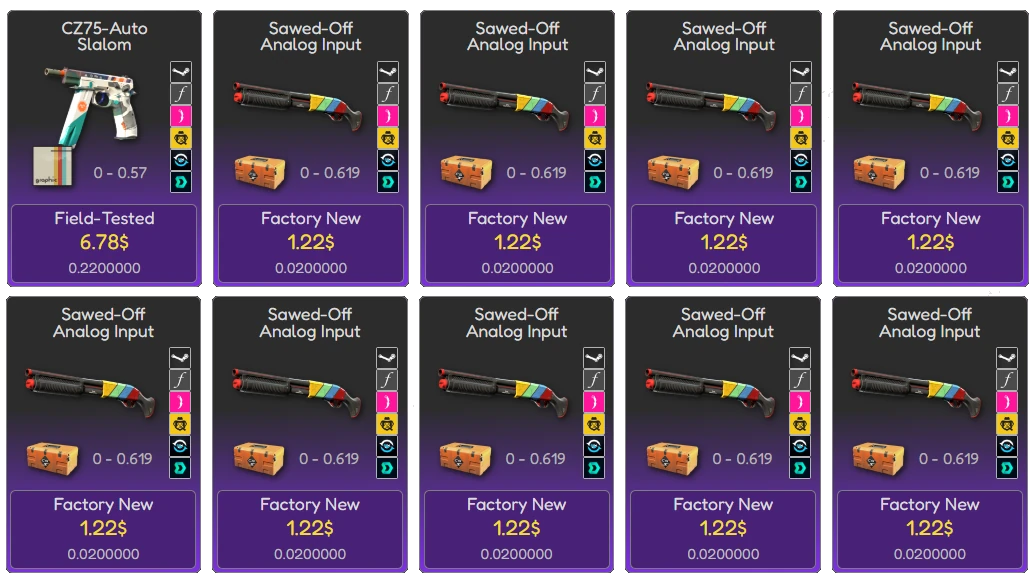
Let's take a look at the example below.
In this trade-up contract, we use one CZ75-Auto | Slalom from the Graphic Design Collection and nine Sawed-Off | Analog Input skins from the Kilowatt Collection.
INPUTS
OUTCOMES
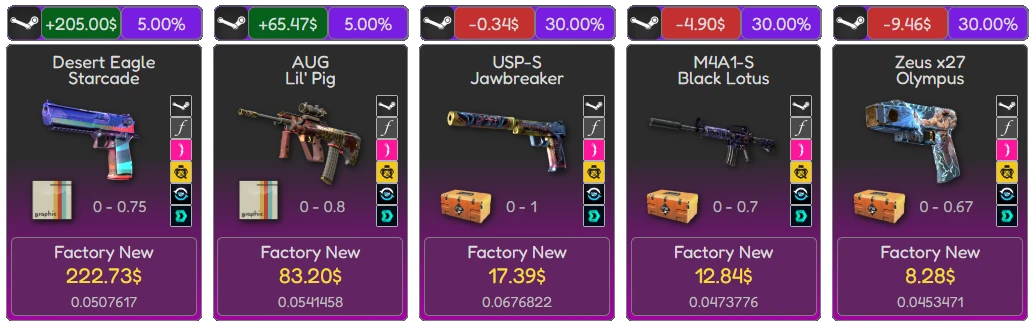
The Graphic Design Collection has two possible outcomes at the Classified rarity. Since we use only one skin from this collection, it accounts for 10% of the total trade-up probability. This 10% is split equally between the two possible outcomes, giving each skin a 5% chance of being obtained.
The remaining nine input skins come from the Kilowatt Collection, which has three possible outcomes at the Classified rarity. Since these nine skins account for 90% of the total trade-up probability, that probability is distributed equally among the three possible outcomes. As a result, each Kilowatt Collection skin has a 30% chance of being obtained.
This example demonstrates how the new trade-up formula distributes probabilities based on the number of input skins from each collection, rather than the total number of possible outcomes across all collections.
StatTrak™ and Souvenir trade-ups
StatTrak™ and Souvenir trade-ups follow the same core probability and float calculation rules as regular trade-ups. However, there are a few important differences to keep in mind.
Souvenir skins can be used in trade-up contracts, but they do not produce Souvenir outcomes. Instead, they behave like regular skins, meaning the resulting skin will not have the Souvenir designation.
StatTrak™ skins, on the other hand, produce StatTrak™ outcomes. However, StatTrak™ skins cannot be mixed with regular or Souvenir skins in the same trade-up contract.
Another important limitation is that not every skin has a StatTrak™ variant. Because of this, some trade-ups that are possible with regular skins may not be possible with StatTrak™ skins, as there may not be enough eligible StatTrak™ inputs available.
Covert trade-ups to knives and gloves
Covert trade-ups for knives and gloves follow the same general rules as other trade-up contracts. The main difference is that they require 5 skins instead of 10. The same principles for calculating outcome probabilities apply, but there are a few additional details to consider when dealing with Doppler and Gamma Doppler finishes.
The main complication comes from the different variations of these finishes. Doppler knives can have Phase 1, Phase 2, Phase 3, Phase 4, Ruby, Sapphire, and Black Pearl variations. Gamma Doppler knives have Phase 1, Phase 2, Phase 3, Phase 4, and Emerald variations.
For most collections, these variations follow specific probability distributions. For regular Doppler finishes, the commonly reported chances are 20% for each phase, 9% for Ruby, 9% for Sapphire, and 2% for Black Pearl. For Gamma Doppler finishes, the reported chances are 23% for each phase and 8% for Emerald. These percentages describe the distribution among finish variations, not the probability of receiving a knife from the entire trade-up contract.
However, there is an important exception involving the original cases containing Doppler finishes: Chroma, Chroma 2, and Chroma 3.
In these cases, the reported probability for each regular Doppler phase is 80%, while the probabilities for Ruby, Sapphire, and Black Pearl remain unchanged. As you can see, these percentages add up to well over 100%, which is impossible under a conventional probability distribution.
This apparent inconsistency means that Doppler finishes from these cases can have a much higher chance of appearing in trade-ups than other possible outcomes. The most likely explanation is a mistake in Valve's original implementation, potentially caused by assigning an 80% probability to each phase instead of distributing a total of 80% across all phases. However, this explanation has not been officially confirmed by Valve.
Later cases containing Doppler finishes do not appear to exhibit the same behavior. The original Chroma cases, however, retain this unusual probability distribution.
When calculating knife trade-ups, it is therefore important to distinguish between the original Chroma collections and later collections. Applying the same probability assumptions to all Doppler-containing collections could lead to incorrect calculations and misleading profitability estimates.
How to find low float skins?
The most challenging part of doing trade-ups is finding skins with the right floats at reasonable prices. This process requires time, patience, and a good understanding of the market.
There are several ways to source skins, including third-party trading platforms and the Steam Community Market. Setting buy orders can be an effective strategy, as it allows you to purchase skins at your target price instead of paying whatever sellers are currently asking. This way you can look for opportunities to buy low-float skins and resell higher-float ones.
However, relying on a single trade-up can significantly limit your options. A more effective approach is to work on several trade-ups simultaneously, allowing you to search for a wider range of skins and take advantage of more market opportunities. The more potential inputs you can work with, the easier it becomes to find suitable skins at competitive prices.